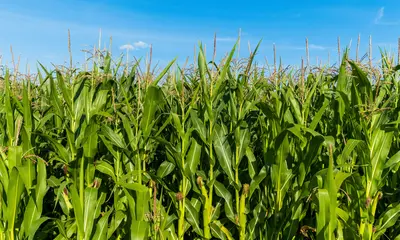
Pesticide resistance management comes down to one habit: rotate by the mode-of-action group number printed on the label, and change that number every pest generation. Switching from one brand to another does not count if both carry the same number. A field failure blamed on a "weak batch" is often the same group used three or four times in a row under different trade names.
What does the number on the label mean?
Three industry committees classify pesticides by how they kill: IRAC for insecticides, HRAC for herbicides and FRAC for fungicides. Products that share a group number act on the same target in the pest, so a mutation that defeats one usually defeats all of them. The same logic applies to fungicide programmes against tomato diseases such as late blight.
The IRAC mode of action classification sorts insecticides into numbered groups by target site. Pyrethroids such as lambda-cyhalothrin and deltamethrin are Group 3A. Spinosyns are Group 5, emamectin benzoate is Group 6, and diamides such as chlorantraniliprole are Group 28. Bt proteins, whether sprayed or built into a crop, sit in Group 11A. Glyphosate is HRAC Group 9.
CropLife International members made a voluntary commitment to print group codes and mode-of-action icons on all crop protection labels by 2023. If a label has no code, check the active ingredient against the committee list before you buy.
The rotation rule: one group per pest generation
Rotation is counted in pest generations. IRAC guidance defines a treatment window as one insect generation, or about 30 days when generation length is unknown. Inside one window you may repeat the same group. In the next window you must switch.
Larvae that survive a Group 3A spray are the parents of the next generation. If their offspring meet Group 3A again, you select the same survivors twice. If they meet Group 5 or Group 28, the survivors die.
The rule a label reader can follow has five parts:
- Write down the group number of every product applied, including seed treatments and Bt traits.
- Keep one group inside one window of about 30 days, or one pest generation if you know it.
- Never use the same group in two windows in a row against the same pest.
- After a suspected control failure, never follow with the same group. Move to a different number at once.
- Treat products with different names but the same number as the same product.
Australian cotton growers adopted this rule after pyrethroids failed against Helicoverpa in central Queensland in January 1983. In their strategy, pyrethroids were confined to one 42-day window matched to one Helicoverpa generation, with a maximum of three sprays. Crops that needed many sprays had to use at least three of five chemical groups.
Spraying only when the pest passes the economic threshold also slows resistance. Every spray you skip is one less round of selection.
When does a tank mix help, and when is it wasted money?
A tank mix delays resistance only if each partner would control the target pest or weed on its own. If the pest already survives one partner, the mix is a single mode of action at a higher price.
The HRAC guideline to herbicide resistance states that each active ingredient in a mixture should give high control of the target weed and come from a different site of action. A 2016 GRDC paper lists the conditions for an effective herbicide mix: each herbicide at its full rate for the target weed, and no resistance to any herbicide in the mix.
Check pre-mixed products the same way: compare the rate of each active ingredient with its full rate when sold alone. A pre-mix at half rates of two groups protects neither.
What losing a chemistry cost growers
Each case below shows what happened after one group was used too often.
| Case | Group lost (label code) | Documented consequence |
|---|---|---|
| Helicoverpa armigera, Australian cotton, 1983 | IRAC 3A (pyrethroids) | Yield losses of up to 20% in late crops |
| Fall armyworm, Brazilian maize, 2003–2016 | IRAC 3A (pyrethroids) | 23–68% of larvae survived a diagnostic dose of lambda-cyhalothrin |
| Fall armyworm, Brazilian Bt maize, 2013–2015 | IRAC 11A (Cry1 proteins) | Resistance to one Cry1 protein carried over to two others |
| Helicoverpa zea, US cotton, 2016–2021 | IRAC 11A (Cry1 and Cry2 proteins) | Sprayed Bt cotton yielded 112–336 kg lint/ha more than unsprayed under heavy pressure |
| Palmer amaranth, Georgia cotton, after 2005 | HRAC 9 (glyphosate) | Herbicide costs more than doubled; 52% of the crop hand weeded at USD 57/ha |
Fall armyworm and pyrethroids
Brazilian monitoring of 197 field populations collected between 2003 and 2016 found that 23–68% of larvae survived lambda-cyhalothrin at a dose that kills susceptible insects. In Africa, a 2022 study of 13 Kenyan populations found low toxicity for deltamethrin and lambda-cyhalothrin, while spinetoram, spinosad and lufenuron remained highly toxic.
A pyrethroid is often the cheapest product in the shop. Against fall armyworm, the worked example below shows it can cost more than twice as much as an effective product once the second spray and lost leaf area are counted.
Helicoverpa and Bt
Bt crops show that a group number covers more than one protein. In Brazil, where Bt maize covered 80% of the maize area by 2013–2014, a fall armyworm strain resistant to Cry1F also showed cross-resistance to Cry1Ab and Cry1A.105. Changing from one Cry1 hybrid to another did not change the group.
In the southern United States, a 2022 study found resistance to Cry1Ac, Cry1Fa and Cry2Ab in most of 95 bollworm strains. Mississippi State researchers reported that sprayed Bt cotton has generally yielded 100 to over 300 lb of lint per acre more (112–336 kg/ha) than unsprayed Bt cotton when bollworm pressure is high.
Palmer amaranth and glyphosate
Glyphosate resistance in Palmer amaranth was confirmed in Georgia in 2005. By the early 2010s, a University of Georgia survey found that growers hand weeded 52% of the cotton crop at an average of USD 57/ha. That was a cost increase of at least 475% over the years before resistance, and herbicide spending had more than doubled.
Worked example: a 120-day maize season against fall armyworm
The figures are illustrative; use local prices. A grower plants maize expecting 5 t/ha at USD 200/t, so the crop is worth USD 1,000/ha. Fall armyworm larvae appear soon after emergence and keep feeding through the vegetative stages that matter for corn yield. The generation lasts about 30 days in warm weather, so the season splits into three windows.
- Window 1 (days 0–30): Group 28 diamide, as a seed treatment or one foliar spray.
- Window 2 (days 31–60): Group 5 spinosyn, sprayed only if scouting passes the threshold.
- Window 3 (days 61–90): Group 15 (lufenuron) or Group 6 (emamectin benzoate). Do not return to Group 28.
Now the shortcut: the grower uses a pyrethroid in Window 2 because it costs USD 10/ha against USD 30/ha for the spinosyn. Where most larvae survive pyrethroids, the spray fails. A week later the grower buys the spinosyn anyway, and the extra week of feeding costs about 4% of yield, or USD 40/ha.
The cheap spray therefore costs 10 + 30 + 40 = USD 80/ha, against USD 30/ha for doing it right the first time. The same arithmetic applies to any crop: the price of a failed spray is the spray, the replacement and the damage between them.
Record the group number and date of every spray. Without them, you cannot know which number to use next.
Does pesticide resistance management pay back?
Yes, within about two seasons. A 2015 USDA Economic Research Service report on glyphosate resistance management in corn and soybean found that the cumulative returns from managing resistance overtook those from ignoring it after about two consecutive years. Growers who used glyphosate alone had lower yields and returns than those who added at least one other herbicide, even though the mix cost more.
A corn-soybean rotation, natural enemies and biologicals reduce how often any group must be used, which slows selection further.
Valora Earth helps growers log each application by field and date, which is the record a rotation rule depends on.
Frequently asked questions
Is switching to a different brand of the same insecticide a rotation?
No. Two products with the same IRAC, HRAC or FRAC group number act on the same target in the pest. A population that survives one will usually survive the other. A real rotation changes the group number on the label between pest generations.
How often should I rotate insecticide modes of action?
Change the group once per pest generation. IRAC uses a window of about 30 days when generation length is unknown. Within one window you may repeat the same group if the pest returns. In the next window, use a different group, and never follow a suspected control failure with the same group.
Do tank mixes prevent herbicide resistance?
A tank mix delays resistance only when each partner controls the target weed on its own, at its full label rate, and from a different site of action. If the weed already resists one partner, the mix acts as a single herbicide. Mixing and then rotating to a different mix gives the most protection.